
Very polite gentlemen, professional and got the job done to a great standard in impressive time
Buy power when it’s cheap.
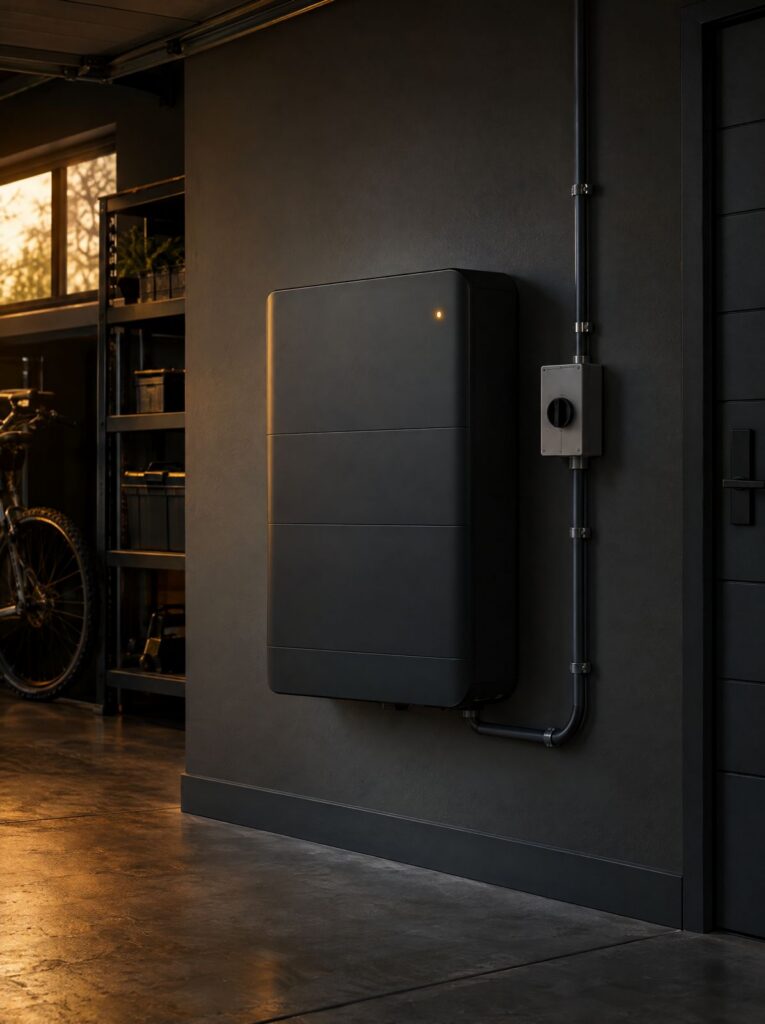
A home battery stores power when it costs least — overnight on an off-peak tariff, or from your own panels during the day — and runs your house on it when the grid is at its most expensive.

Start your quote
Find our how battery storage
pays for your home energy
Battery sizing depends on how much electricity you use after dark and what tariff you’re on — so rather than guess at a price, we’d rather ask you a few things first and come back with something that actually means something.
Two Ways In
You don’t need solar panels
to benefit from a battery
Best if your roof isn’t suitable, or you want to start smaller.
Best if you already have panels, or are fitting both at once.
We’ll look at your bills and your tariff, then tell you straight.
Why DW Solar
Why homeowners choose us for battery storage
Battery sizing is where most quotes go wrong. Too small and you’re buying peak-rate electricity by nine in the evening; too big and you’ve paid for capacity that never gets used. We work it out from your half-hourly consumption, not a rule of thumb.
THE BENEFITS
Battery storage
How it saves you money
Free survey, written quote, no obligation.
What Our Customers Say
We’ve been using DW Solar for our installs for many years!
Always reliable, always outstanding work and a great bunch of people to work with!
5* Service all round
Very smooth process from the initial contact to the scaffolding and installation, The installation was completed within a day and we was saving money instantly. I would recommend this company for solar panels and battery storage
Very tidy solar installation
By the team. Thank you.
Batteries we fit






HOW IT WORKS
From survey to switch-on
in five steps
Step one takes about an hour, and there’s nothing to pay.
Questions
Battery storage FAQs
The questions we’re asked most often on battery surveys. If yours isn’t here, ask us directly — we’d rather you had the full picture before deciding.
Want to know if a battery pays for your home?
Free survey and written quote, with no obligation.
No. A battery on its own charges from the grid during the cheap overnight window on a time-of-use tariff, then powers your home through the expensive hours.
It only stacks up if you’re on — or willing to move to — that kind of tariff. We check your current tariff at the survey and will tell you plainly if the numbers don’t work.
It depends on how much electricity you use after dark, not on the size of your house. We work from your half-hourly consumption where it’s available, or a year of bills where it isn’t.
Undersizing means you’re back on peak-rate electricity by mid-evening. Oversizing means paying for capacity that never gets used. The point of the survey is to land between the two.
A garage, utility room, plant room or a suitable outside wall. It needs a solid wall or floor, sensible access, and room around it for ventilation.
Units vary in size and weight, and some are rated for outdoor mounting while others aren’t. We’ll confirm the location and the exact unit at the survey.
Only if backup is specified when the system is installed — it isn’t automatic, and not every battery supports it.
Backup normally covers essential circuits rather than the whole house: lights, sockets, the fridge, the router. Tell us at the survey if this matters to you, because it changes the design.
Yes, whoever installed them. Retrofitting storage to an existing system is one of the most common jobs we do, and in most cases the panels and existing inverter can stay exactly as they are.
Warranties are typically around ten years, usually expressed as a number of years or a total amount of energy cycled through the battery, whichever comes first.
Capacity reduces gradually rather than failing outright, and the warranty will normally state the capacity the manufacturer guarantees at the end of the term. We’ll show you that figure with your quote.
Modern home batteries are designed and certified for indoor and outdoor domestic installation, with built-in management systems that monitor temperature, charge and faults.
Installation matters as much as the product: correct mounting, proper isolation, the right protective devices and full certification. That’s the part we’re responsible for, and we don’t cut corners on it.
It depends entirely on how much electricity you use, when you use it, and what tariff you’re on — which is why we won’t quote a figure before seeing your bills.
At the survey we’ll model it against your actual usage and show you the working, including the assumptions. If the payback doesn’t look good enough to justify it, we’ll tell you.
Find out what a battery could save in your home
We’ll look at your usage, your tariff and where the unit could go, then give you a clear written quote. No obligation.